
Knitting with Linen Stitch for Summer Garments

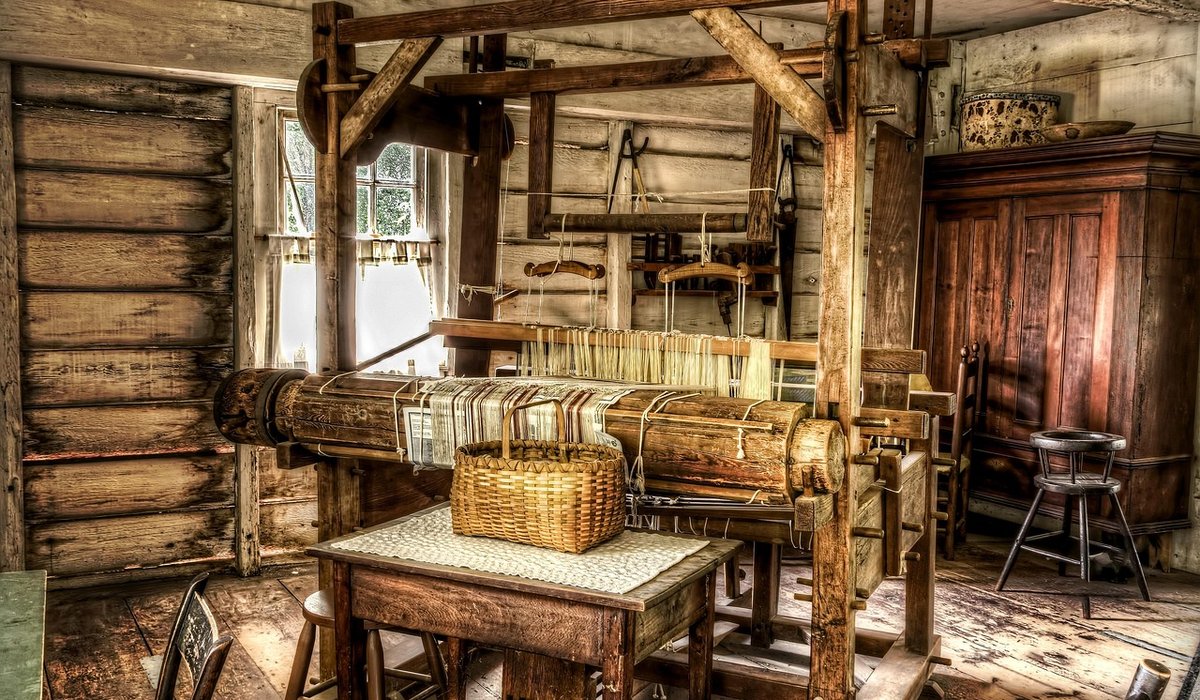
There is a particular pleasure in knitting with flax. A field of it in July, that soft blue haze, gives no hint of the crisp, cool cloth it becomes. Linen has been worn against British skin for centuries for good reason — it breathes, it wicks, and it gets softer every time it meets water. Pair that fibre with linen stitch and you get a fabric with real body: dense, woven-looking and unexpectedly comfortable when the weather turns warm.
What Linen Stitch Actually Is
Before you cast on, a word on names. In older British pattern books this texture is often called moss stitch, while American publications call it linen stitch. For clarity here, we mean the slip-stitch fabric worked like this: knit one, then slip one purlwise with the yarn held to the front, and repeat to the end of the row. Every row is identical when you work flat, so there is no purling at all.
The magic happens with the floats. Because the slipped stitches carry a strand of working yarn across their front, each stitch sits on a little horizontal bar, and the surface becomes a chequerboard of knots and lines. It looks woven rather than knitted, and once the rhythm clicks it moves along briskly.
Why It Suits Summer Garments
Linen stitch is firm. It barely stretches sideways, it refuses to curl, and it holds a shape beautifully, which makes it ideal for the loose, boxy silhouettes we reach for in July and August. Those floats trap a thin layer of air against the skin, so despite the density the cloth feels cool rather than heavy.
- It hangs away from the body instead of clinging, which is flattering in warm weather.
- No curling means no ribbed hems or rolled edges to fight with — a simple slip-stitch selvedge will do.
- It hides imperfect shaping; increases and decreases vanish into the texture.
- It gives a light double knitting or worsted a sturdier, more expensive-looking finish.
Do remember that with almost no elasticity, a garment needs a little positive ease — roughly 2–5 cm through the bust — or it will feel restrictive when you raise your arms.
Choosing the Right Yarn
Pure linen is wonderful but unforgiving at first: crisp, stiff and with no give, softening over several washes into something lovely. If you want an easier introduction, a linen-cotton blend is gentler on the hands and still breathable. Linen-silk and linen-viscose give more drape, which suits flowing tops rather than structured ones.
- Pick a smooth, tightly plied yarn — the texture needs crisp stitch definition.
- Avoid fluffy, haloed yarns; they blur the woven effect entirely.
- Keep wool for your winter knits and stick to plant fibres next to the skin in summer.
- Buy an extra ball. This stitch eats roughly 20–30% more yarn than stocking stitch.
Tension, Needles and the Swatch
The slipped stitches pull the fabric in, so go up one or two needle sizes from the one recommended on the ball band. A smooth metal needle helps the yarn slide, though many knitters prefer wood for the grip.
Knit a tension square of at least 15 cm, wash it exactly as you plan to wash the finished garment, and dry it flat before measuring. Linen changes after its first bath, and you want to know that before you commit to a jumper's worth of knitting.
Cast on loosely — a cable cast-on worked with a needle two sizes larger is ideal — and bind off with the same generosity, or your neckline will refuse to pass over your head. The good news is that linen stitch is naturally even, so your tension will look more consistent than it deserves to.
Projects That Earn Their Keep
Start small if the stitch is new to you. A washcloth or a pair of coasters teaches the rhythm in an evening. From there, a market bag, a flat clutch, a sunglasses case or a cushion cover all show the texture off beautifully.
For garments, the simplest shapes work best: a boxy tee, a sleeveless shell, a short-sleeved cardigan knit in one piece from the top down. Raglan shaping sits neatly within the texture, and because the fabric is firm you can skip waist shaping altogether. Another lovely trick is to use linen stitch only for bands and borders — a hem, a button placket or a neckline — to add structure to an otherwise plain stocking-stitch top.
Washing, Wearing and Keeping
Treat your finished piece kindly and it will outlast most of your wardrobe. Wash by hand in lukewarm water or on a gentle cycle, skip the fabric softener, and never wring. Roll the garment in a towel to lift the excess water, then dry it flat in the shade — prolonged direct sun weakens flax fibres.
Press while still slightly damp, either on the reverse or with steam, and store folded rather than hung. Linen sheds no microplastics, it is fully biodegradable, and it resists odours naturally, all of which sit comfortably alongside a slower, healthier approach to dressing. Best of all, knitting this stitch is quietly meditative: repetitive, rhythmic and remarkably good for the mind.

Joeby Ragpa
This template is so awesome. I didn’t expect so many features inside. E-commerce pages are very useful, you can launch your online store in few seconds. I will rate 5 stars.
ReplyAlexander Samokhin
This template is so awesome. I didn’t expect so many features inside. E-commerce pages are very useful, you can launch your online store in few seconds. I will rate 5 stars.
ReplyChris Root
This template is so awesome. I didn’t expect so many features inside. E-commerce pages are very useful, you can launch your online store in few seconds. I will rate 5 stars.
Reply